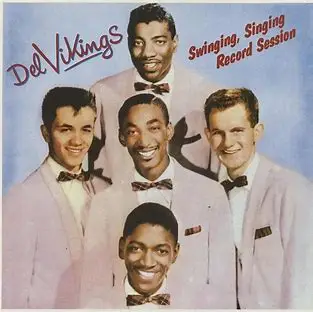
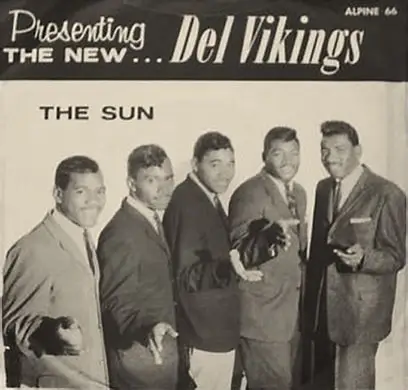
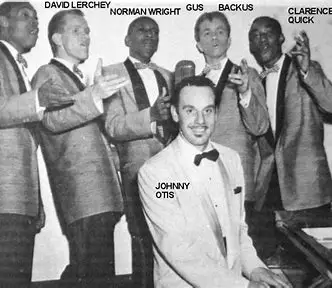
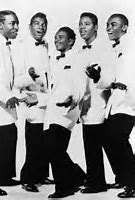

Group Name: The Dell-Vikings (also stylized as The Del-Vikings or Dell Vikings)
Formed: 1955 – Pittsburgh, Pennsylvania, USA
Genres: Doo-Wop, Rhythm and Blues, Rock and Roll
Instruments: Vocals (vocal group)
Years Active: 1955–present (various incarnations)
Labels: Fee Bee, Dot, Mercury, Luniverse
Early Life
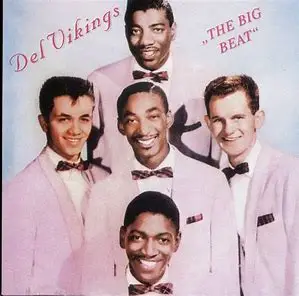
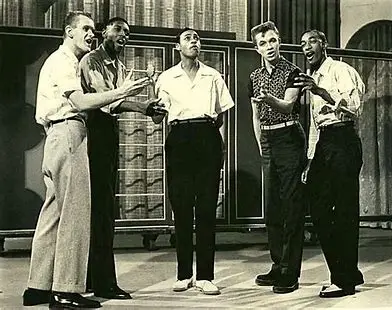
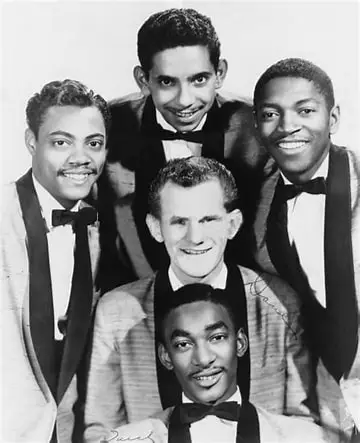
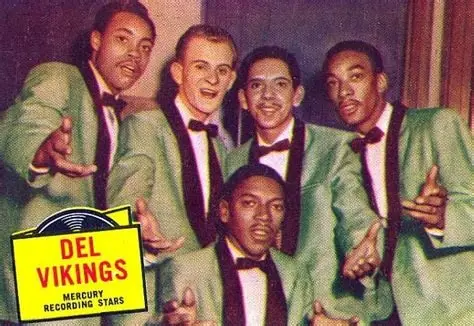
The Dell-Vikings formed at Pittsburgh’s NCO (Non-Commissioned Officer) Club in 1955 by a group of young U.S. Air Force servicemen stationed at the city’s air base. The original members included Cornelius Harp, Kripp Johnson, Samuel Patterson, Donald Jackson, and Bernard Robertson. Their name—a combination of the then-trendy “Dell” and the exotic flair of “Vikings”—was as original as their approach to vocal harmony.
Notably, the group was one of the first successful racially integrated vocal groups in the U.S., a significant cultural milestone in the racially tense 1950s.
Career Highlights
The group struck gold early on with the 1957 doo-wop masterpiece:
“Come Go with Me” – Originally released on the Fee Bee label, this smash hit caught fire and soared to #4 on the Billboard Hot 100. It became a rock ‘n’ roll classic and sold over a million copies.
Other notable hits include:
“Whispering Bells” – A 1957 hit featuring Kripp Johnson on lead, reaching #9 on the pop chart and #5 on R&B.
“Cool Shake” and “Jitterbug Mary” – Minor charting singles but fan favorites.
The group’s sudden success prompted a bidding war between labels, ultimately leading to a confusing tangle of multiple versions of the group performing and recording under slightly different names (e.g., “The Dell-Vikings,” “The Del-Vikings,” “The Versatiles”).
Musical Career
The Dell-Vikings are known for their smooth vocal blend, lush harmonies, and perfect blend of rhythm and blues with pop sensibility. Their music was upbeat but carried a romantic undercurrent, ideal for the sock-hop era. They were among the first Black vocal groups to cross over into mainstream white audiences on the pop charts.
Their doo-wop sound was elevated by lead vocals (particularly Cornelius Harp’s tenor and Kripp Johnson’s smooth baritone), rich background vocals, and strong production—even on early indie recordings.
Film/TV Work
“Come Go with Me” has had a long life in pop culture, appearing in:
“Stand By Me” (1986)
“American Graffiti” (1973)
Numerous television commercials and nostalgia-driven retrospectives.
Their music continues to be featured in documentaries, doo-wop revues, and oldies radio shows.
Later Years
Due to military obligations and label disputes, members rotated in and out frequently. Kripp Johnson eventually led a version of the group well into the 1980s, often performing on the oldies revival circuit. Legal battles over the group’s name and rights persisted for years.
Despite internal conflicts, the music endured. Various incarnations of the Dell-Vikings have continued to perform live, often featuring original or early members alongside new vocalists.
Cultural Impact
The Dell-Vikings were trailblazers—one of the few integrated doo-wop groups to achieve national fame during a time of deep racial segregation. Their success helped pave the way for greater inclusion in pop music and broadened the reach of Black vocal groups to mainstream audiences.
Their enduring influence is found in the sound of early rock, the rise of harmony-driven pop, and the legacy of doo-wop as a deeply emotional, cross-generational genre. “Come Go with Me” remains one of the most beloved songs of the 1950s, securing their place in music history.