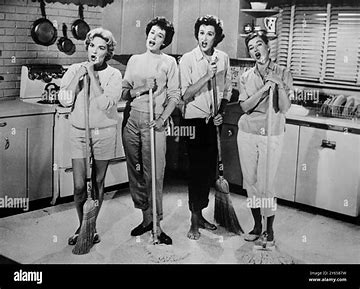
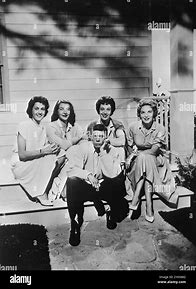
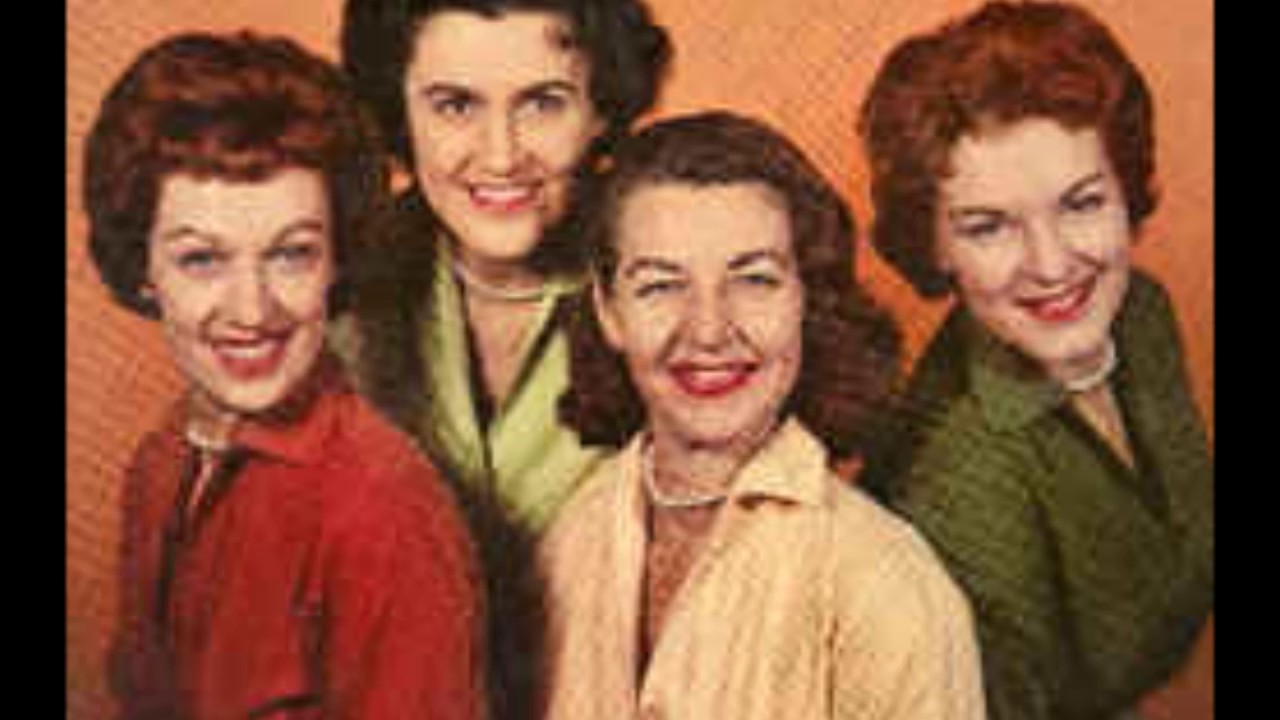
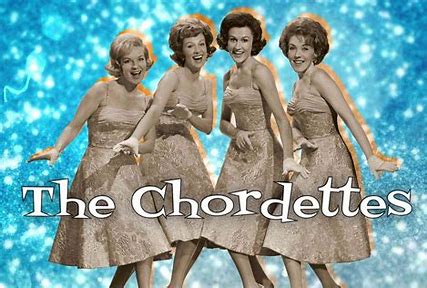
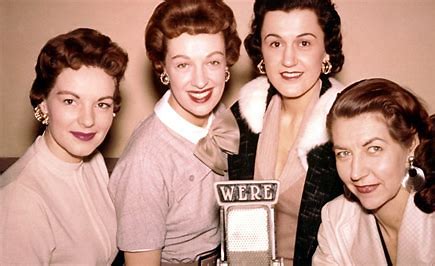
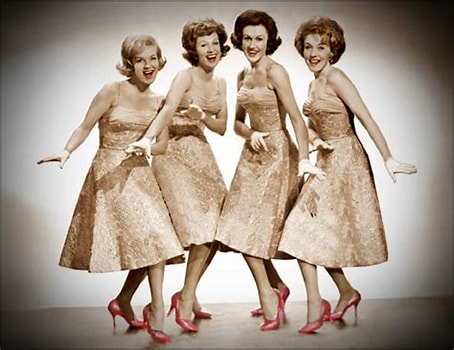
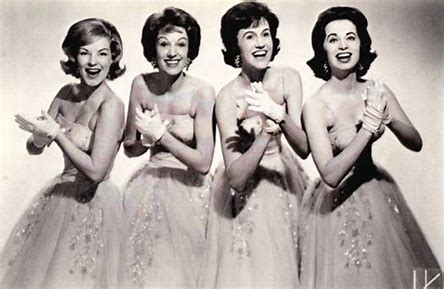
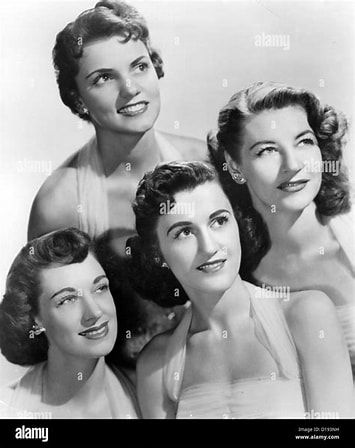

- Group Members: Janet Ertel, Carol Buschmann, Lynn Evans, Margie Needham (notable lineup)
- Formed: 1946
- Origin: Sheboygan, Wisconsin, USA
- Genres: Traditional Pop, Barbershop, Doo-wop
- Years Active: 1946–1963
- Labels: Cadence Records, Columbia Records
Early Life and Formation
The Chordettes began in Sheboygan, Wisconsin, in 1946, originally as a barbershop quartet. Founding members included Janet Ertel and her sister-in-law Carol Buschmann, joined by Dorothy Schwartz and Jinny Osborn (later replaced by Lynn Evans and Margie Needham in the most well-known lineup). Initially focused on barbershop harmony, their clean-cut image and vocal precision made them a favorite among postwar audiences.
They gained national attention after being featured regularly on Arthur Godfrey’s television and radio programs, which served as a launching pad to broader fame.
Breakthrough and Rise to Fame
Their breakthrough came in 1954 with the release of the charming and whimsical “Mr. Sandman,” produced by Archie Bleyer of Cadence Records. The song shot to No. 1 on the Billboard chart and sold over a million copies, becoming one of the decade’s defining hits.
They followed with a string of memorable singles:
- “Born to Be With You” (1956)
- “Just Between You and Me” (1957)
- “Lollipop” (1958) – an upbeat, sugary tune that became a jukebox and radio staple
These songs secured their place in the pop vocal pantheon and showcased their seamless blend of sweetness and precision.
Musical Style
The Chordettes were admired for their lush, close harmonies and polished performances. Rooted in barbershop tradition, their sound evolved to include elements of mainstream pop and early rock ‘n’ roll. While they didn’t perform with instruments, their vocal arrangements often mimicked instrumental interplay, creating a full-bodied sound with just four voices.
Their style was elegant, charming, and distinctly feminine—offering a contrast to the more rebellious image of male rock and roll acts of the era.
Key Hits
- “Mr. Sandman” (1954) – Their signature song and a timeless classic
- “Born to Be With You” (1956) – A romantic ballad showcasing their softer side
- “Lollipop” (1958) – A bubbly, finger-snapping hit that appealed to all ages
- “Never on Sunday” (1961) – A sultry, exotic track from the film of the same name
Influence and Legacy
The Chordettes paved the way for future all-female vocal groups. Their success in the male-dominated pop scene of the 1950s was significant, demonstrating the commercial viability of female harmony groups. Their recordings remain staples on oldies radio and are frequently featured in films, commercials, and television shows evoking the 1950s.
“Mr. Sandman” in particular has enjoyed enduring popularity, appearing in everything from Back to the Future to Stranger Things.
Later Years
As musical tastes shifted in the early 1960s, The Chordettes’ style gradually fell out of favor. The group disbanded in 1963, though members occasionally reunited for special appearances. Janet Ertel, the last surviving original member, passed away in 1988.
Cultural Impact
The Chordettes symbolized a more innocent era in American pop music—an age of soda fountains, sock hops, and wholesome harmonies. Their music evokes nostalgia for the golden age of radio and early television. They are frequently cited as a key influence on later girl groups like The Shirelles and The Ronettes, who built upon the harmony-driven blueprint The Chordettes helped popularize.
,