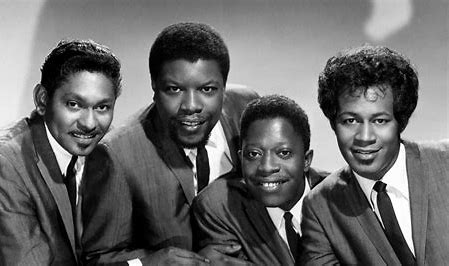
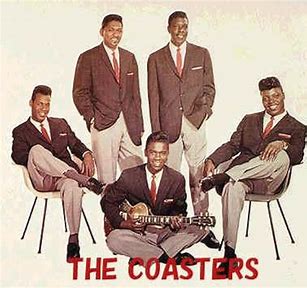
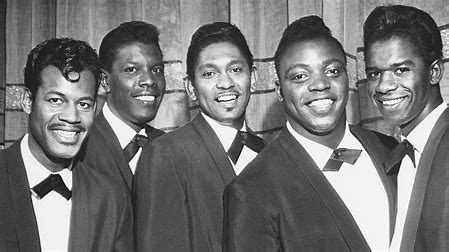
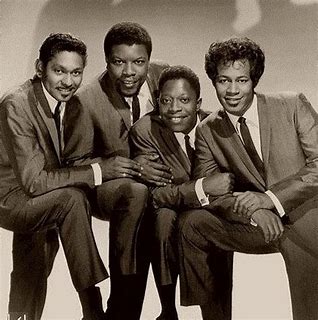
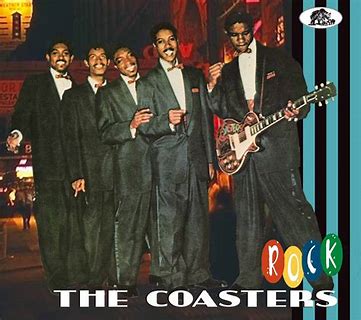

Full Group Name: The Coasters
Origin: Los Angeles, California, U.S.
Genres: Rhythm and Blues, Rock and Roll, Doo-wop
Years Active: 1955–present (with changing lineups)
Labels: Atco Records, King, Date, Columbia, and others
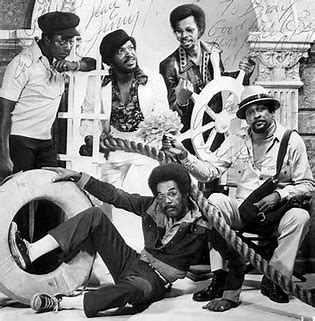
Classic Members
Carl Gardner (Lead Tenor)
Billy Guy (Baritone)
Bobby Nunn (Bass)
Leon Hughes (Tenor)
Adolph Jacobs (Guitarist)
(Later key members included Will “Dub” Jones and Cornell Gunter.)
Early Life
The Coasters emerged from the breakup of a Los Angeles R&B group called The Robins. When two members—Carl Gardner and Bobby Nunn—left The Robins in 1955, they joined forces with songwriting/producing duo Jerry Leiber and Mike Stoller, forming The Coasters. Leiber and Stoller had already penned hits for The Robins and would now become the creative engine behind The Coasters’ success.
Career Highlights
The Coasters burst onto the national scene with a series of witty, story-driven songs that blended rock and roll with comedy, soul, and social commentary. Their first major hit was:
“Down in Mexico” (1956) – A sultry R&B track that introduced the group’s theatrical vocal style.
But their real breakthrough came after relocating to New York and recruiting new members. They scored a string of smash hits that became defining moments in rock and roll history:
“Young Blood” / “Searchin’” (1957) – “Searchin’” became their first No. 1 R&B hit and a Top 10 pop hit.
“Yakety Yak” (1958) – A No. 1 pop and R&B hit with teenage humor and driving saxophone by King Curtis.
“Charlie Brown” (1959) – Another Top 10 pop hit featuring the famous line “Why’s everybody always pickin’ on me?”
“Along Came Jones”, “Poison Ivy”, and “Little Egypt” – Further hits that highlighted their humorous, narrative-driven style.
They became the first vocal group inducted into the Rock and Roll Hall of Fame in 1987.
Musical Career
What made The Coasters unique was their collaboration with Leiber and Stoller, who wrote songs like miniature plays—often satirical, with a strong sense of rhythm, drama, and humor. The Coasters delivered those songs with vocal precision, theatrical flair, and impeccable timing.
They were often dubbed “The Clown Princes of Rock and Roll” for their comedic delivery and lively stage presence. Their songs stood apart from standard doo-wop fare, offering a sharper, more theatrical brand of R&B-influenced rock.
They were also one of the few Black vocal groups of the time to cross over successfully to white teen audiences without compromising their R&B roots.
Later Years
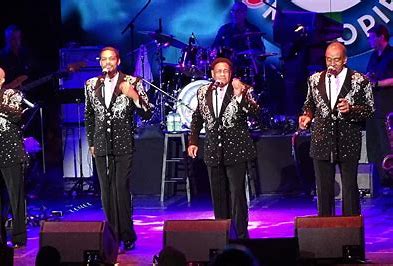
While the hits slowed in the 1960s as musical tastes shifted, The Coasters continued to tour extensively, often as part of rock and roll revival shows. Numerous offshoots of the group emerged over the decades, with various lineups led by original or later members.
Carl Gardner continued to perform under “The Coasters” name until his retirement in 2005, after which his son Carl Gardner Jr. carried the torch. Legal disputes occasionally arose over use of the group name, but the original legacy remained intact.
Legacy
The Coasters’ blend of rock and roll, rhythm and blues, and vaudevillian humor made them one of the most influential groups of the 1950s and early 1960s. Their music helped set the stage for narrative songwriting in pop and rock and proved that humor and storytelling could find a place in hit songs.
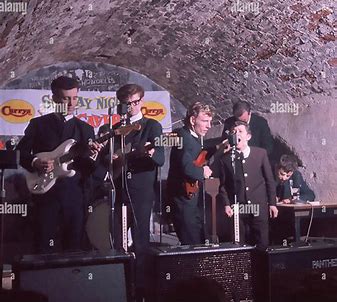
They inspired countless groups, from The Beatles (who covered “Searchin’” and “Young Blood”) to generations of R&B and pop vocalists. Their songs remain staples of oldies radio and continue to be used in film, television, and commercials.
The Coasters were inducted into the Rock and Roll Hall of Fame in 1987 and the Vocal Group Hall of Fame in 1999. Their influence on vocal group harmony, stage performance, and pop songwriting is immeasurable.