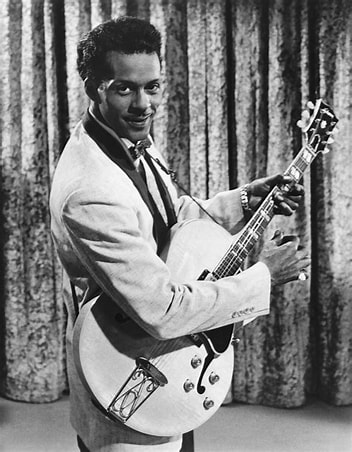
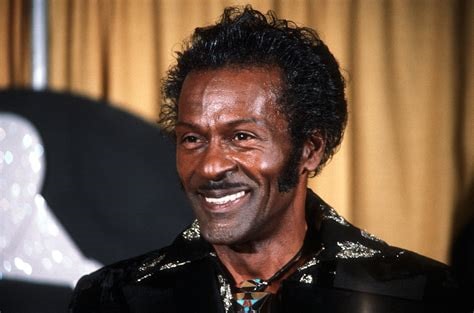
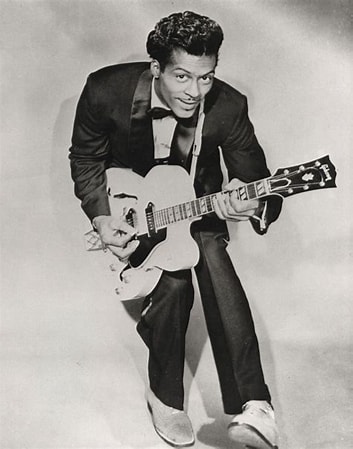

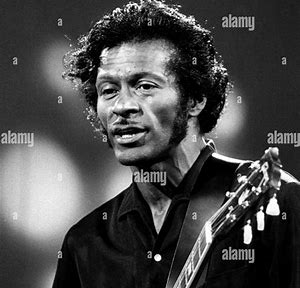
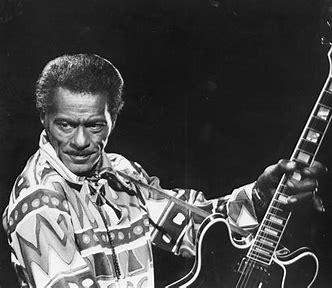
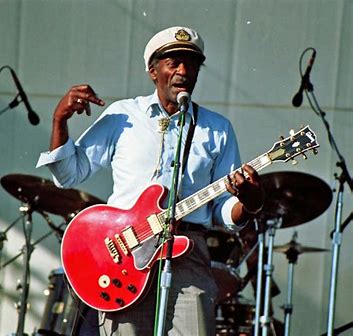
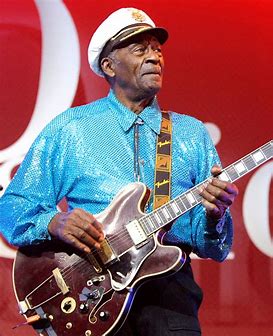
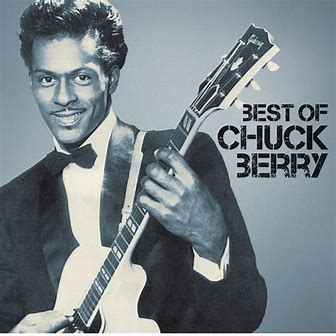



Full Name: Charles Edward Anderson Berry
Born: October 18, 1926 – St. Louis, Missouri, USA
Died: March 18, 2017 – Wentzville, Missouri, USA
Genres: Rock and Roll, Rhythm and Blues
Instruments: Guitar, Vocals
Years Active: 1953–2017
Labels: Chess Records, Mercury Records, Atco
Early Life
Chuck Berry was born into a middle-class African-American family in St. Louis. His father was a contractor and church deacon, and his mother a school principal. Berry showed an early interest in music and performed in high school talent shows.
In 1944, at age 17, he was arrested and sentenced to three years in a reformatory for armed robbery. After his release, he worked a variety of jobs and began performing in local clubs, where he was influenced by blues, country, and swing music.
Career Highlights
Berry’s big break came in 1955, when he traveled to Chicago and met Muddy Waters, who introduced him to Chess Records. That same year, he recorded “Maybellene,” a reworking of the country tune “Ida Red.” The song hit #1 on the R&B chart and #5 on the Billboard Hot 100, making it one of the first rock and roll crossover hits and propelling Berry to stardom.
Between 1955 and 1960, he released a string of hits that defined the sound and structure of rock and roll:
“Roll Over Beethoven” (1956)
“Too Much Monkey Business” (1956)
“School Day” (1957)
“Rock and Roll Music” (1957)
“Sweet Little Sixteen” (1958)
“Johnny B. Goode” (1958) – arguably the most iconic guitar riff in rock history
In 1959, his career stalled when he was arrested under the Mann Act for transporting a 14-year-old girl across state lines. He served 20 months in prison, but returned to recording after his release.
Musical Career and Style
Chuck Berry was the primary architect of rock and roll. His style fused:
The rhythmic drive of R&B
The storytelling of country music
Boogie-woogie piano licks translated to guitar
Sharp, humorous, and youth-focused lyrics
Berry’s signature elements included:
Fast-paced guitar solos with double-stops and slides
Clever rhymes and storytelling about cars, school, romance, and rebellion
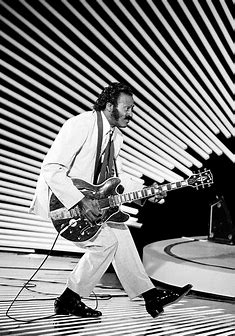
An unmatched showmanship, including his famous “duck walk” across the stage
His influence spread to every major rock figure who followed, from The Beatles to The Rolling Stones to Bob Dylan.
Later Years and Comebacks
Berry’s career had multiple revivals:
In 1964, after his release from prison, he had a renewed string of hits including “No Particular Place to Go.”
In 1972, his novelty track “My Ding-a-Ling” became his only #1 Billboard Hot 100 hit, though it was met with mixed critical response.
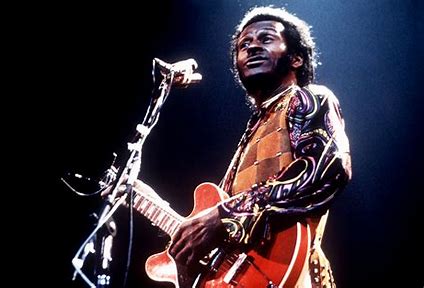
He toured extensively through the ’70s and ’80s, often performing with local backup bands without rehearsals—a practice that drew criticism but became part of his legend.
He appeared in major rock documentaries, including The London Rock and Roll Show (1973) and Hail! Hail! Rock ’n’ Roll (1987), the latter directed by Taylor Hackford and featuring performances with Keith Richards and Eric Clapton.
Film/TV Work and Public Image
Chuck Berry made numerous TV appearances and was featured in films like American Hot Wax (1978). His rough edges and reputation for being difficult to work with added to his mystique, and he was often described as brilliant but mercurial.
His legal issues and attitude toward the music industry also colored his image—he often distrusted managers and promoters and insisted on being paid in cash before performing.
Health Struggles and Final Projects
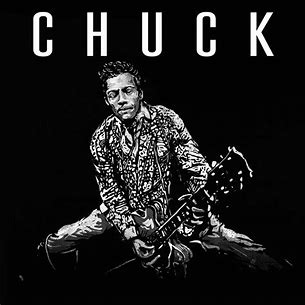
Berry continued performing into his 80s, including regular shows at Blueberry Hill in St. Louis. In 2017, on his 90th birthday, he announced Chuck, his first studio album in 38 years. He died just five months later, on March 18, 2017.
Chuck was released posthumously in June 2017 and received critical acclaim as a final statement from one of rock’s founding fathers.
Cultural Impact and Legacy
Chuck Berry is widely regarded as the father of rock and roll. His guitar playing, songwriting, and charismatic performances laid the foundation for the genre. His songs became blueprints for garage bands, British Invasion groups, punk rockers, and beyond.
In 1986, he was one of the first 10 inductees into the Rock and Roll Hall of Fame.
NASA included “Johnny B. Goode” on the Voyager Golden Record, sent into space as a representation of Earth’s culture.
Keith Richards said, “It’s very difficult for me to talk about Chuck Berry ’cause I’ve lifted every lick he ever played.”
Despite personal controversies, Berry’s musical legacy remains undeniable and universal.