
Full Name: Charles Hardin Holley
Born: September 7, 1936 – Lubbock, Texas, USA
Died: February 3, 1959 – Clear Lake, Iowa, USA
Genres: Rock and Roll, Rockabilly, Country, Pop
Instruments: Vocals, Guitar, Piano, Violin
Years Active: 1952–1959
Labels: Decca, Coral, Brunswick
Early Life
Charles Hardin “Buddy” Holley was born in Lubbock, Texas, the youngest of four children. Raised in a tight-knit Baptist family, Buddy was exposed to music early on — gospel, country, and rhythm & blues all filtered through his West Texas upbringing. He picked up piano and violin as a boy but fell in love with the guitar as a teenager. By the time he reached high school, he was performing with friends at talent shows and local radio stations.
In 1952, Buddy formed a duo with his friend Bob Montgomery called “Buddy and Bob”, playing bluegrass and country tunes. But as rock and roll swept across America, Holly’s sound evolved.
Career Highlights
Buddy Holly signed with Decca Records in 1956, but his initial recordings went nowhere. However, in 1957, recording under the name “The Crickets” for Brunswick Records, Buddy struck gold with “That’ll Be the Day.” It hit No. 1 on the Billboard charts and launched Holly into stardom.
Key hits include:
“That’ll Be the Day” (1957) – #1 hit that became a rock ‘n’ roll milestone
“Peggy Sue” (1957) – a signature track with clever lyrics and distinctive drumming
“Oh Boy!” (1957)
“Maybe Baby” (1958)
“Everyday” (1957) – a tender, minimalist gem still beloved
“It’s So Easy” (1958)
“Rave On” (1958)
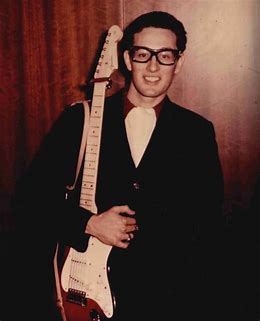
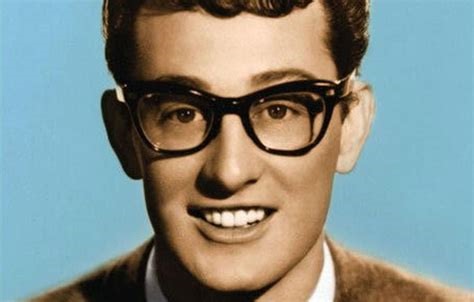
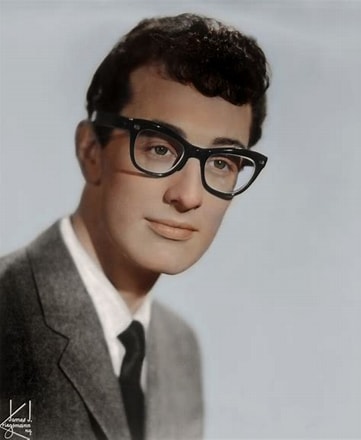
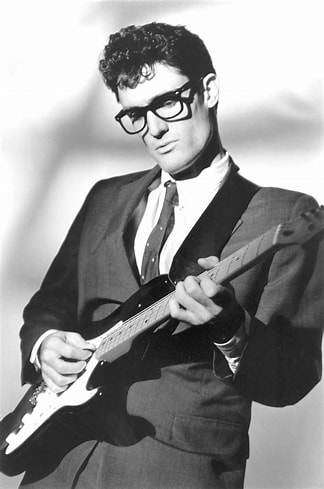
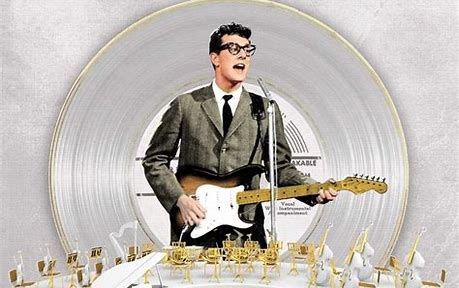
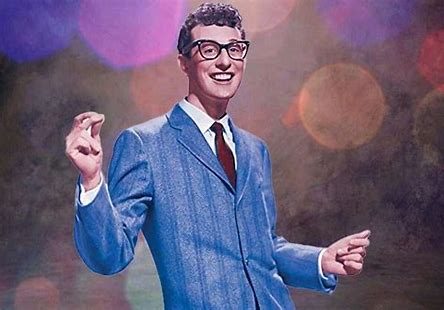
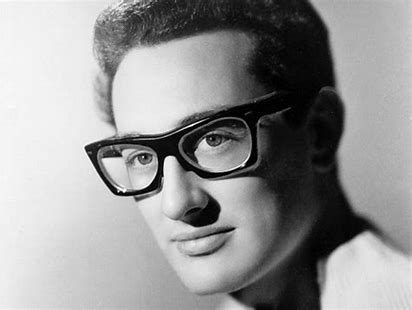
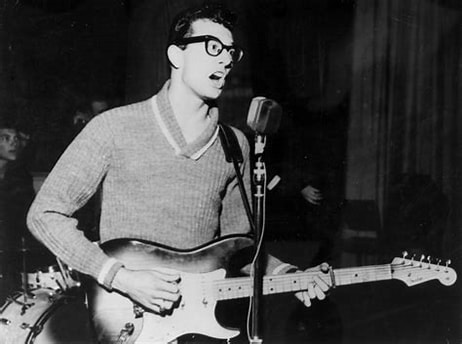
With thick-rimmed glasses, a hiccupy vocal style, and fierce determination, Buddy Holly became an unlikely teen idol. He stood out for his technical innovation and songwriting prowess.
Musical Career
Unlike many of his contemporaries, Holly was deeply involved in the production and arrangement of his music. He experimented with multi-track recording, double-tracking vocals, and incorporated strings and harmonies in groundbreaking ways.
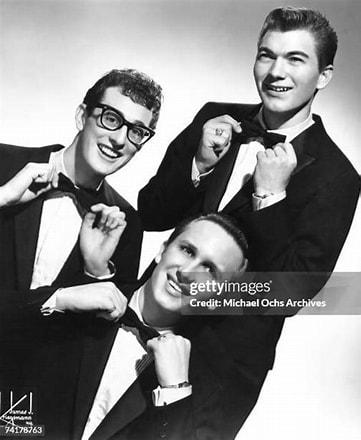
His band, The Crickets, became the prototype for self-contained rock bands like The Beatles: a group that wrote, played, and recorded their own music. In fact, The Beatles named themselves partly in homage to The Crickets, and Paul McCartney would later acquire the rights to Holly’s song catalog.
Buddy’s approach was raw yet refined — blending rockabilly rhythms with pop melodies and heartfelt lyrics. His music has been covered and revered by artists across genres, from Elvis Costello to Linda Ronstadt to Bruce Springsteen.
Film/TV Work
While Buddy Holly’s life was tragically short, his story was widely celebrated in film and television after his passing:
“The Buddy Holly Story” (1978) – A biopic starring Gary Busey (who earned an Oscar nomination)
Numerous documentaries and rock retrospectives celebrating his influence
His songs were also staples of early rock ‘n’ roll TV shows and radio programs.
Later Years and Untimely Death
In late 1958, Holly split from The Crickets and moved to New York City with his new wife, María Elena Santiago, focusing on his solo career and broader musical experimentation.
Tragically, Holly’s life was cut short on February 3, 1959, when the plane he chartered after a snowy concert in Clear Lake, Iowa, crashed shortly after takeoff. Also killed were fellow rockers Ritchie Valens and J.P. “The Big Bopper” Richardson.
This day became known as “The Day the Music Died,” immortalized in Don McLean’s song “American Pie.”
Cultural Impact and Legacy
Buddy Holly’s influence is staggering considering his short career. In just 18 months of national fame, he forever changed rock music. His legacies include:
Pioneering the singer-songwriter format
Shaping the modern rock band structure
Bridging racial divides by embracing R&B rhythms and Black musical traditions
Inspiring the British Invasion, with artists like The Beatles, The Rolling Stones, and The Hollies (named in his honor) citing him as a primary influence
He was inducted into the Rock and Roll Hall of Fame in 1986 as part of its inaugural class.
Buddy Holly remains a mythic figure in music — the boy genius from Lubbock who brought brains, heart, and technical brilliance to the birth of rock ‘n’ roll. His music continues to resonate with new generations, a reminder that sometimes the brightest stars burn fast and leave a trail that lasts forever.